
The number changes; your assumptions need checking
Moving from Fortune Gems 2 to Fortune Gems 3 does not mean you can carry over every rule. Both official JILI entries list five paylines. The useful difference is the feature you must learn, rather than an imagined increase from ten lines to twenty or a promise that the later title pays better.
For a returning reader, this is a version-change guide: what stays identifiable, what the published descriptions distinguish, and what remains unanswered. If your current information screen does not match the title being discussed, stop and identify the game before using any instructions.
By PKLIVE. Publication date: 2026-11-02. Sources checked October 17, 2026. For adults legally eligible to participate; this article does not establish account or regional eligibility.
Build the comparison around the documented change
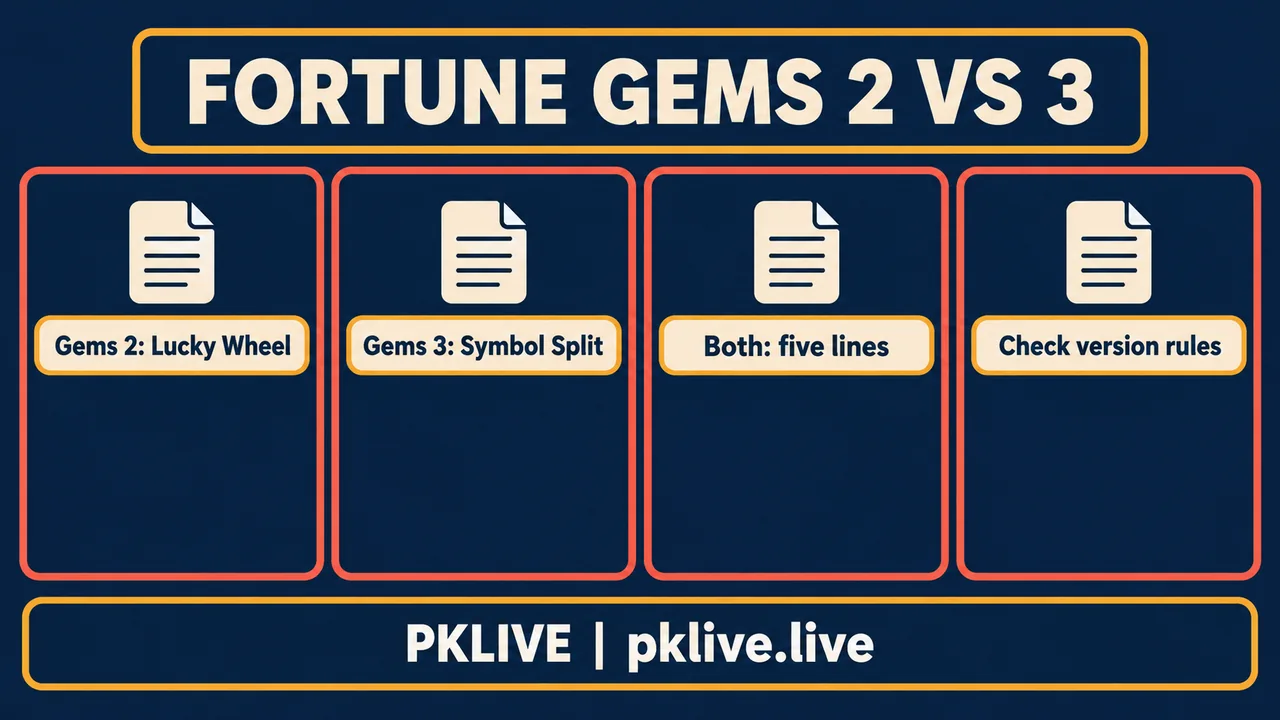
Fortune Gems 2 highlights a Scatter-related Lucky Wheel and a right-side multiplier reel. Fortune Gems 3 highlights symbol splitting and multipliers associated with winning points. Those short descriptions identify different subjects to study, but they are not complete instructions for settling a round.
| Official entry | Listed lines | Distinctive feature focus |
|---|---|---|
| Fortune Gems 2 | Five | Lucky Wheel |
| Fortune Gems 3 | Five | Symbol split |
What a wheel changes about the question you ask
When a game describes a wheel feature, two questions matter separately: what makes it start, and how its eventual award is calculated. Knowing the feature exists answers neither question in full. The word Scatter alone does not establish a symbol count, a frequency or a free-spin entitlement.
For someone switching versions, that separation prevents a common mistake: seeing a familiar symbol and expecting the same event. Use the named feature as an index into the game’s help. You need the qualifying condition and the settlement explanation, rather than a claim that the wheel is due after an uneventful run.
Nor does an attractive wheel graphic tell you how likely each displayed outcome is. Its visible segments are presentation information unless the rules explicitly establish the probabilities. Treating every segment as equally likely would introduce a mathematical assumption that the reviewed source does not support.
What a split changes about the explanation you need
A symbol-split description raises a different reading task. You need to understand how the game treats the changed symbol when evaluating an award. The visual idea of something dividing is not enough to establish how many extra matches, lines or payments exist.
Ask for an explanation of the before-and-after state in the current help: what qualifies for the feature, what changes, and which amount is eventually credited. These are questions prompted by the published feature, not claims that the feature follows a particular sequence. This comparison does not fill gaps with rules from another member of the family.
That makes a video useful only when its title and rules can be matched. A clip showing a dramatic transformation without the information screen may illustrate an animation while leaving the decisive settlement condition unknown. You should not need to spend money to discover which interpretation a guide intended.
Decide what knowledge you can carry across
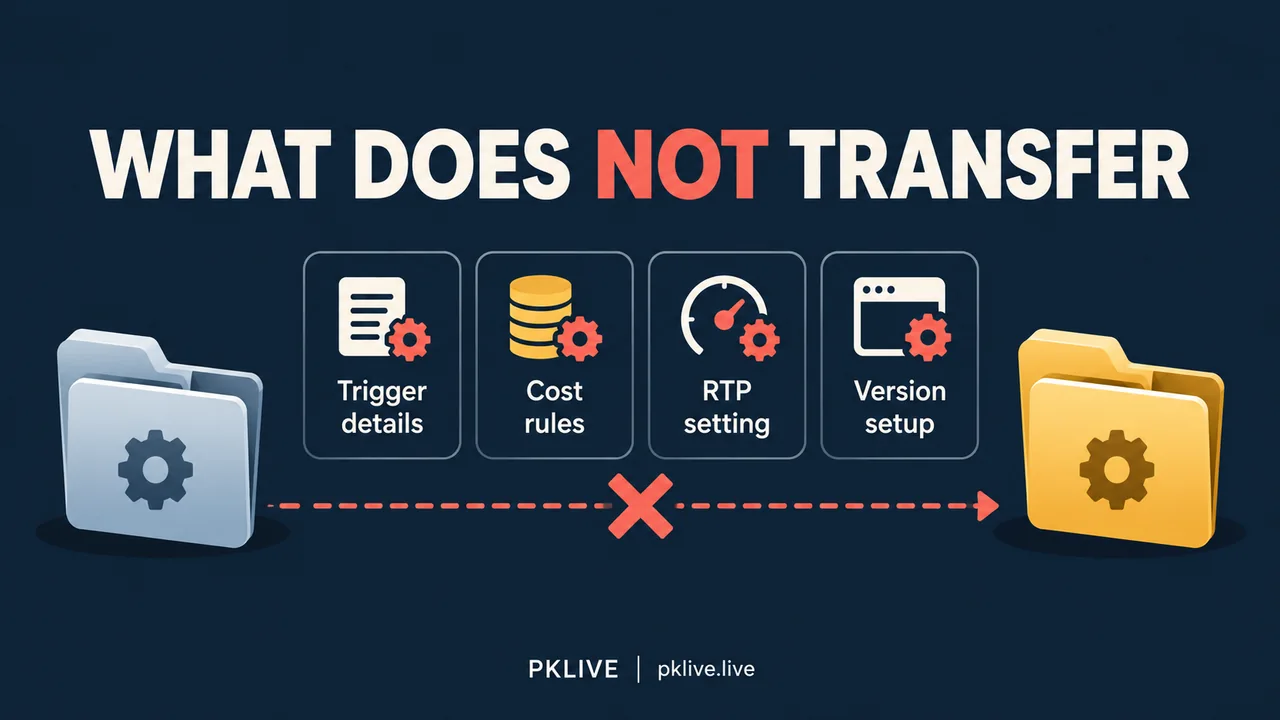
Carry over the habit of identifying the version and reading the cost. Relearn the feature-specific conditions. Leave any numerical return comparison open until matching configuration evidence exists. This approach is more useful than calling one game an upgrade because its title has a larger number.
The following map distinguishes things that look transferable from things that require fresh evidence. It does not claim that a feature omitted from a short catalogue description is absent from the game.
| Assumption on switching | Keep it? | Reason |
|---|---|---|
| The family name identifies the exact rules | No | Version suffix matters |
| Both official entries list five lines | Yes, as catalogue context | Not a full deployed-rule check |
| An unlisted feature cannot exist | No | A short summary is not exhaustive |
| The later version has better returns | Unproven | No matching RTP evidence |
Which version is the better learning fit?
If your question is specifically about the wheel, Fortune Gems 2 is the documented starting point. If your question is about the split feature, start with Fortune Gems 3’s information. That is a preference tied to published differences; it is not a claim about which game is more profitable or less risky.
A small fixed entertainment allowance does not become larger because you change versions. If switching is an attempt to recover a loss, end the session instead. You can compare the descriptions without buying another round or accepting an offer.
Official entries were checked on October 17, 2026. Full wheel and split settlement rules, trigger frequencies, current RTP settings and PKLIVE availability were not verified. Old site reviews are excluded as mechanics sources where they give unsupported statistics. This page resolves the version distinction, while leaving those separate factual questions open.
Sources, method and limits
This is an exact-title catalogue comparison. An unlisted feature is not necessarily absent. Trigger counts, free spins, wheel probabilities, split sequences, deployed RTP and PKLIVE availability were not established; check the rules of the version in front of you.
This article was prepared with AI assistance and reviewed for source consistency. Examples explain decisions; they are not accounts of a deposit, withdrawal or game test.
Related reading
- Top JILI Slot Games Philippines 2026: How to Choose at PK LIVE
- Filipino Guide to Casino Odds RTP and Volatility
- How to Verify a Casino Game Provider in the Philippines: Title, Rules, and Source Checks
- Responsible Gaming
The button below opens a separate partner service. Its account, payment and privacy terms apply. Read our Affiliate Disclosure before leaving this publishing site.